About this song
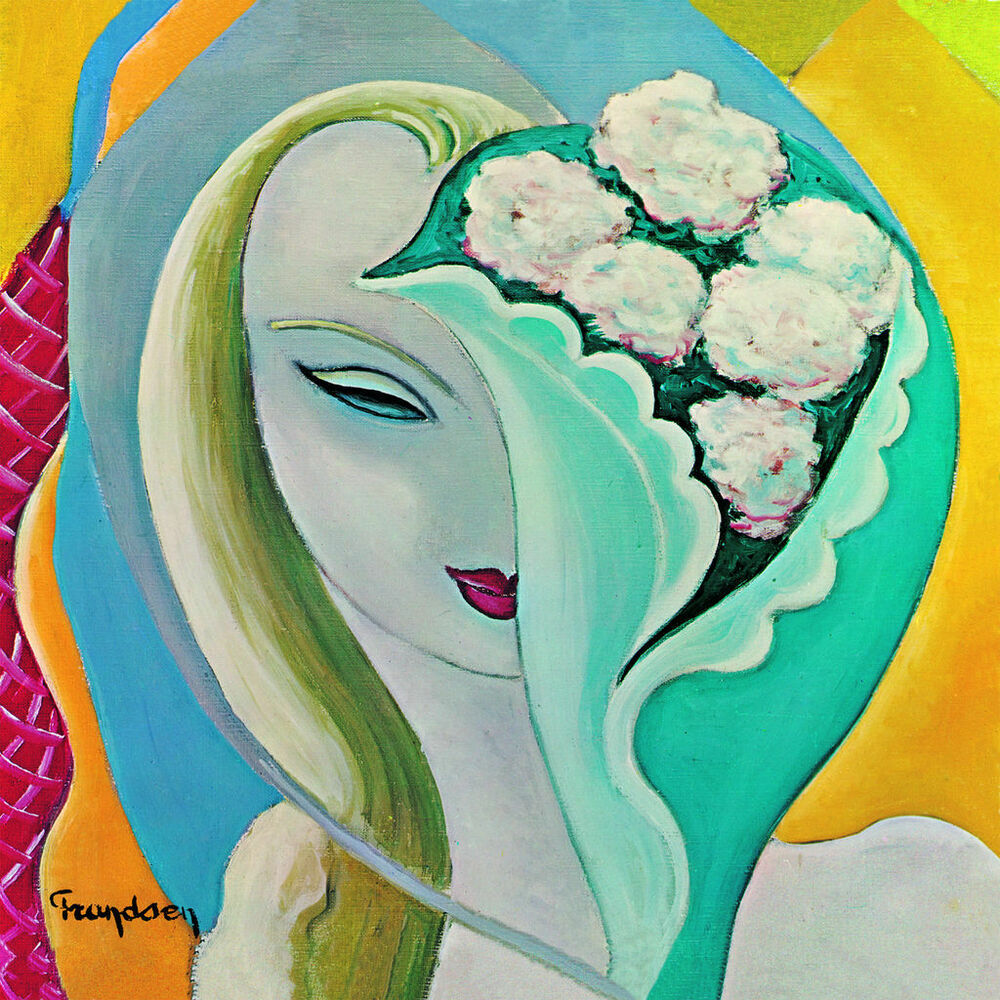
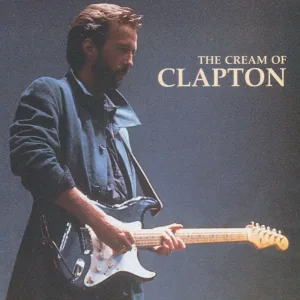
- "Layla" is a song by rock band Derek and the Dominos and the thirteenth track from their album Layla and Other Assorted Love Songs, released in December 1970. It is considered one of rock music's definitive love songs, featuring an unmistakable guitar figure, played by Eric Clapton and Duane Allman, and a piano coda that comprises the second half of the song. Its famously contrasting movements were composed separately by Clapton and Jim Gordon. Inspired by Clapton's then-unrequited love for Pattie Boyd, the wife of his friend and fellow musician George Harrison, "Layla" was unsuccessful on its initial release. The song has since experienced great critical and popular acclaim. It is often hailed as being among the greatest rock songs of all-time. Two versions have achieved chart success, first in 1972 and again twenty years later as an acoustic "Unplugged" performance. In 2004, it was ranked #27 on Rolling Stone's list of "The 500 Greatest Songs of All Time". The song's emotional and famous guitar soloing was ranked number 14 on Guitar World's "100 Greatest Guitar Solos". In 1966, George Harrison married Pattie Boyd, a model he met during the filming of A Hard Day's Night. During the late 1960s, Clapton and Harrison became firm friends. Clapton contributed guitar work on Harrison's song "While My Guitar Gently Weeps" on The Beatles' White Album but remained uncredited, and Harrison co-wrote and played guitar pseudonymously (as L'Angelo Misterioso) on Cream's "Badge" from Goodbye. However, trouble was brewing for Clapton. Between his tenures in Cream and Blind Faith, in his words, "something else quite unexpected was happening: I was falling in love with Pattie." The title, "Layla", was inspired by the The Story of Layla / Layla and Majnun (ليلى ومجنون), by the Persian 12th century poet Nizami Ganjavi. It is based on the real story of a young man called Qays ibn al-Mulawwah (Arabic: قيس بن الملوح) from the northern Arabian Peninsula, in the Umayyad era during the 7th century. When he wrote "Layla", Clapton had been told the story by his friend Ian Dallas who was in the process of converting to Islam. Nizami's tale, about a moon-princess who was married off by her father to someone other than the one who was desperately in love with her, resulting in his madness (Majnun, مجنون, meaning "madman" in Arabic), struck a deep chord with Clapton. According to Boyd, Clapton played the song for her at a party, and later that same evening confessed to George that he was in love with his wife. The revelation caused no small upset between the three of them, but Pattie and George remained married for several more years, and Harrison and Clapton retained their close friendship with no apparent signs of damage. Boyd divorced Harrison in 1977 and married Clapton in 1979 during a concert stop in Tucson, Arizona. Harrison was not bitter about the divorce and attended Clapton's wedding party with Ringo Starr and Paul McCartney. During their relationship, Clapton wrote another love ballad for her, "Wonderful Tonight". Clapton and Boyd divorced in 1989 after several years of separation. After the breakup of Cream, Clapton tried his hand with several artists, including Blind Faith and a husband and wife duo, Delaney and Bonnie. In the spring of 1970, he was told that Delaney and Bonnie's backup band, consisting of bassist Carl Radle, drummer Jim Gordon, and keyboardist Bobby Whitlock, was leaving the group. Seizing the opportunity, Clapton formed a new group, soon known as Derek and the Dominos. In mid-to-late 1970, Duane Allman of The Allman Brothers Band joined Clapton's fledgling band as a guest. Clapton and Allman, already mutual fans, were introduced at an Allman Brothers concert by Tom Dowd. The two hit it off well and soon became good friends. Dowd said of their guitar-playing chemistry, "There had to be some sort of telepathy going on because I've never seen spontaneous inspiration happen at that rate and level. One of them would play something, and the other reacted instantaneously. Never once did either of them have to say, 'Could you play that again, please?' It was like two hands in a glove. And they got tremendously off on playing with each other." Dowd was already famous for a variety of work, and had worked with Clapton in his Cream days (Clapton once called him "the ideal recording man"); his work on the album would be another achievement. For the making of his biographical documentary Tom Dowd and the Language of Music, he remixed the original master tapes of "Layla", saying "There are my principles, in one form or another." Clapton originally wrote "Layla" as a ballad, with lyrics describing his unrequited love for Pattie Boyd, but the song became a "rocker" when Allman reportedly composed the song's signature riff, or repeated musical figure. With the band assembled and Dowd producing, "Layla" was recorded in its original form. The recording consisted of six guitar tracks; a rhythm track by Clapton, three tracks — lastfm